

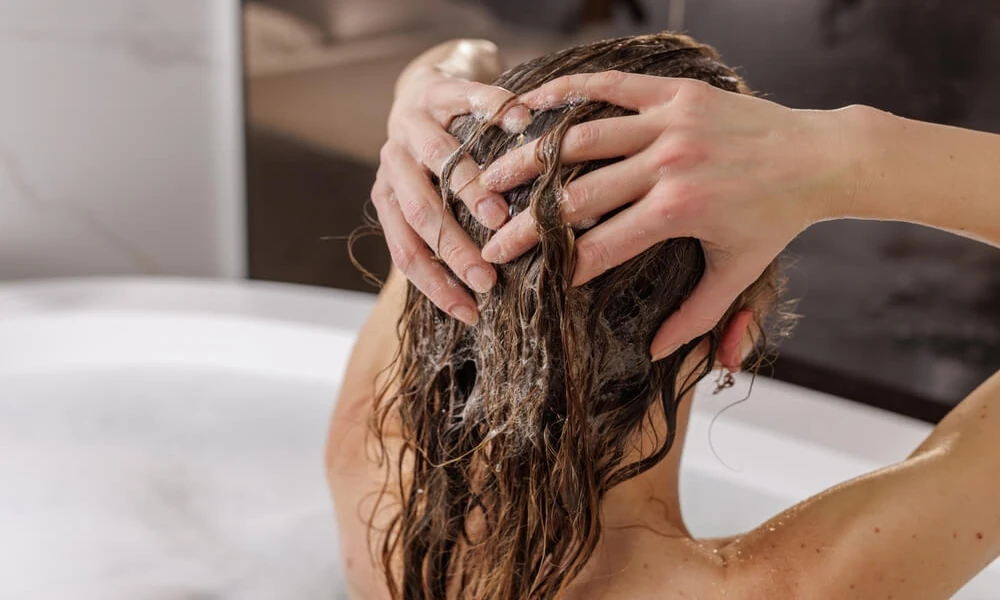
Dry shampoo can make hair look fresher by absorbing oil, but it does not replace washing with regular shampoo and water. Keep it as a between-wash product rather than evidence that the scalp has been cleaned. A finish that looks less oily and a wash that removes accumulated material are different events.
Absorbing oil is a different task from washing it away
The American Academy of Dermatology’s dry-shampoo guidance explains the distinction directly: its particles absorb oil, while regular shampoo and water perform the cleansing. The visual improvement can be useful, but it should not erase the washing step from your routine.
Imagine looking in the mirror before an evening outing. After a dry-shampoo application, the roots may no longer look as oily, and you prefer how the hairstyle sits. That describes the appearance you wanted. It does not mean the product, oil and other material have been rinsed away simply because they are less obvious in the reflection.
The word shampoo can encourage a misleading shortcut. You may count any use of a product carrying that name as a wash. Instead, describe what actually happened: a dry refresh, or cleansing with shampoo and water. Clear names help you remember whether the ordinary washing step has occurred.
This distinction does not require rejecting dry shampoo altogether. It can serve a limited appearance purpose between washes. The mistake is asking that purpose to stand in for another one. A convenient refresh can remain convenient without becoming the only way the hair and scalp are managed.
Use a refresh between washes rather than instead of them
The AAD recommends washing with regular shampoo and water after one or two dry-shampoo uses, while noting that there is no single fixed number that applies to everybody. Treat that guidance as a reason to retain proper washing, not a challenge to see how many extra applications you can accumulate.
Follow the instructions on the product you actually use. Applying more because an earlier layer is no longer delivering the finish you want does not make it a cleansing method. Nor should a friend’s preferred application amount become your direction when the label says something different.
The academy recommends a purchased dry shampoo rather than a homemade version. Resist replacing the product with an improvised kitchen mixture based on a short video. A food ingredient’s familiarity does not provide application directions for use on your scalp, and a homemade powder still would not remove the need for ordinary washing.
Make the next wash practical. If you know that an upcoming morning leaves no time, arrange a suitable washing opportunity rather than treating the dry shampoo as an unlimited extension. The plan can be modest: preserve the helpful short-term refresh while keeping the cleansing step in an actual place in the week.
If you use an enhancement, wig or other added hair, follow its specific product and care restrictions. Advice about applying dry shampoo to growing hair does not automatically permit using it on a particular attachment or fibre. An appearance product that seems convenient for one routine may not belong in another.
Keep an ordinary cleansing product in the routine
Regular shampooing also removes dry-shampoo material that has accumulated, according to the AAD. That is the practical connection between the two steps. The refresh has not escaped the cleaning routine; it has become one of the things that the later wash needs to remove.
If you are choosing a regular cleanser from Truly You’s CRLAB shampoo listings in Mississauga, open the relevant product information and read its application and rinsing directions. Put that actual wash into the routine following dry-shampoo use. Keep the instructions with the bottle so that a hurried refresh does not quietly become a replacement for the wash you intended.
You do not need an elaborate purchase to understand the distinction. A dry refresh and a suitable shampoo-and-water wash have different jobs regardless of how impressive either package looks. If you already have an appropriate washing product, the useful change may be remembering to use it rather than buying more ways to postpone it.
Keep the account accurate if discussing your routine with a professional. Saying you shampoo every few days can hide whether you mean dry shampoo or washing with water. Name both, along with the actual products, so the person advising you understands the pattern rather than making assumptions from one broad word.
Stop adding product over a new scalp problem
The AAD advises stopping dry shampoo if itching, burning or another sign of irritation develops. Do not respond by applying another layer to conceal the appearance or fragrance of the problem. A product that improved yesterday’s hairstyle is not automatically the right response to today’s uncomfortable scalp.
If irritation persists or worsens, seek advice from an appropriate clinician. Severe or concerning symptoms deserve prompt attention; you do not need to wait for a beauty routine to prove a cause. Equally, do not decide that any new hair loss must be caused by dry shampoo without proper assessment.
Describe what you used and what changed rather than trying to make the experience fit a dramatic online claim. A clear product identity and ordinary account of use are enough to begin the conversation. Avoid starting another unfamiliar scalp product in an attempt to cancel the first one’s effects.
A refreshed hairstyle can do its brief job while the next proper wash stays in the plan. Keep those events separate in your language and your calendar. Enjoy the appearance you wanted, then let shampoo and water perform the cleansing task that an oil-absorbing product was never meant to replace.
